1. Build a shelf of comparable games
- Find 5 to 10 games similar in genre, scope, length and art quality, released in the last few years.
- Write down their launch price, not today's discounted price.
- Put your game on that shelf where it fits. Players compare it with those games and ignore how long you worked on it.
2. What one sale pays you
Worked example for a $10 game, before income tax:
| Step | Steam | itch.io (10% share) |
|---|---|---|
| Price paid | $10.00 | |
| Tax included in price (example: 20% VAT) | -$1.67 | |
| Store cut | -$2.50 (30%) | -$0.83 (10%) |
| Refunds (example: 5%) | -$0.29 | -$0.38 |
| You receive (approx.) | $5.54 | $7.12 |
Payment processing fees can also apply on itch.io depending on how payouts are set up. Try your own numbers with the Indie Game Revenue Calculator.
3. Plan discounts before launch
Your launch price sets the anchor for every future sale. Steam limits how often you can discount, so plan a first-year calendar: launch discount, seasonal sales, and a bigger cut later. Too low a launch price leaves no room for sales to matter.
Go deeper
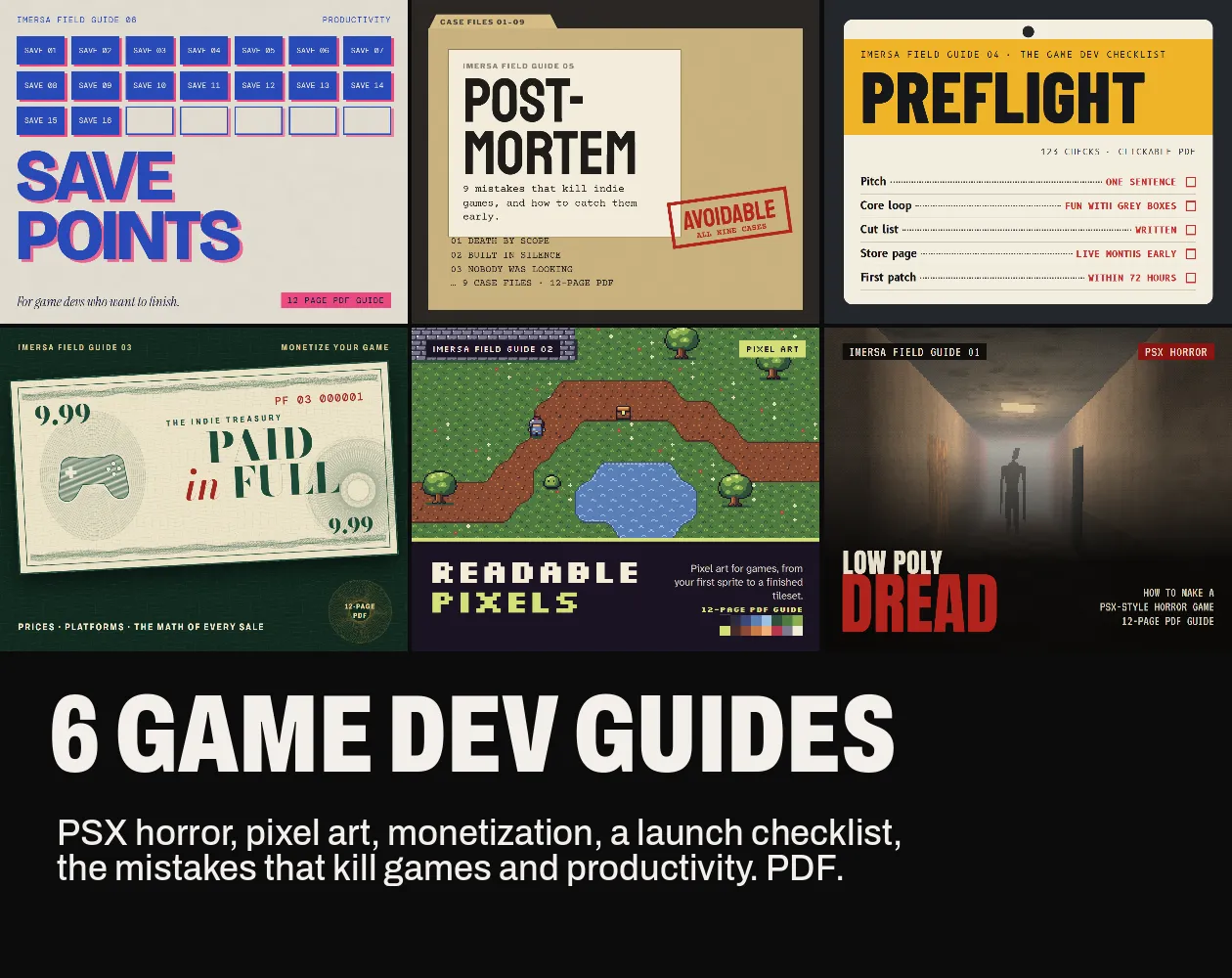
Paid in Full walks the receipt line by line with numbers from Steamworks, itch.io and GameDiscoverCo: business models, the price shelf, wishlist forecasts and the discount calendar. Preflight puts the store page and launch steps in a 123-point checklist, and Post-Mortem covers the mistakes that sink launches.
Questions
Price it like its comparable games. Underpricing signals low quality and leaves no room for discounts.
In regions where VAT or sales tax is included in the price, that tax is removed first and the revenue share applies to the rest.
Who wrote this
Imersa Studios builds the Unity systems, low poly packs and field guides sold on itch.io. The code and techniques here come from shipping those products. More about the studio.