1. Know who the game is for
Write one sentence: this game is for people who like X and Y. If you cannot name the audience, you cannot find them. Look at games with similar tags and read what players say they love.
2. Show the game, early and often
- Record short clips (10 to 30 seconds) of the best moment. A GIF or video works better than a screenshot.
- Post progress weekly on the places your audience already visits.
- Keep a devlog on itch.io or your store page so each update has a home.
A clear capsule or cover matters as much as the clip. Use the store image sizes guide to get the sizes right.
3. Use communities honestly
Subreddits such as r/gamedev and r/IndieDev have rules about self-promotion and have regular threads for sharing work. Read the rules, join the conversation, and share when you have something useful. Spam gets you banned and costs trust.
Game jams and tag pages are also discovery channels. See how to join a game jam.
4. Build wishlists and an email list
On Steam, wishlists are a leading indicator of launch sales, and the Coming Soon page needs to be live well before release. Check the current Steamworks rules for the minimum lead time. Our wishlist estimator turns wishlists into a first-week range, which is a planning number rather than a promise.
An email list belongs to you, unlike a social following. Offer something small, such as a free asset or a demo, in exchange for an address.
5. Learn from games that failed quietly
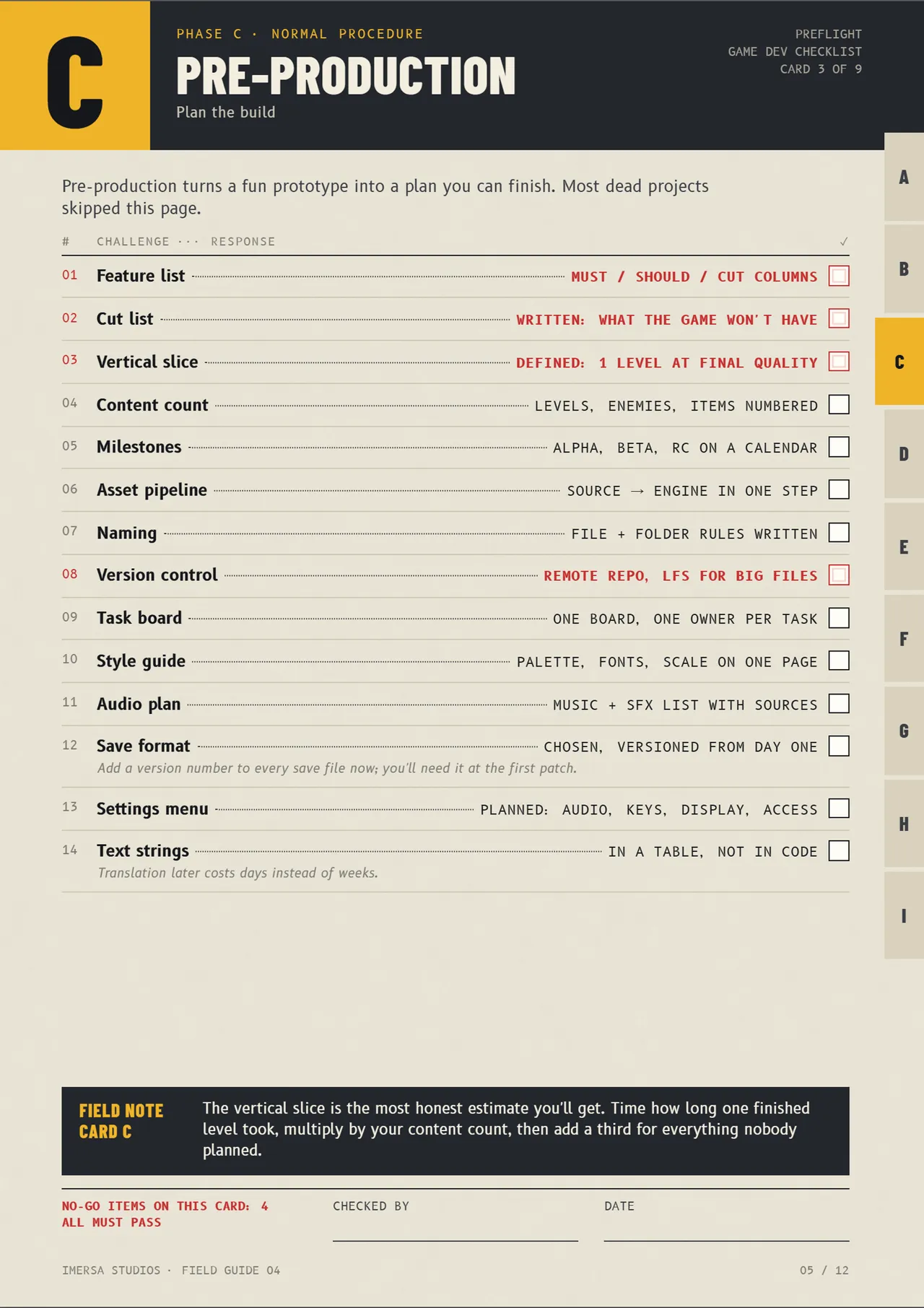
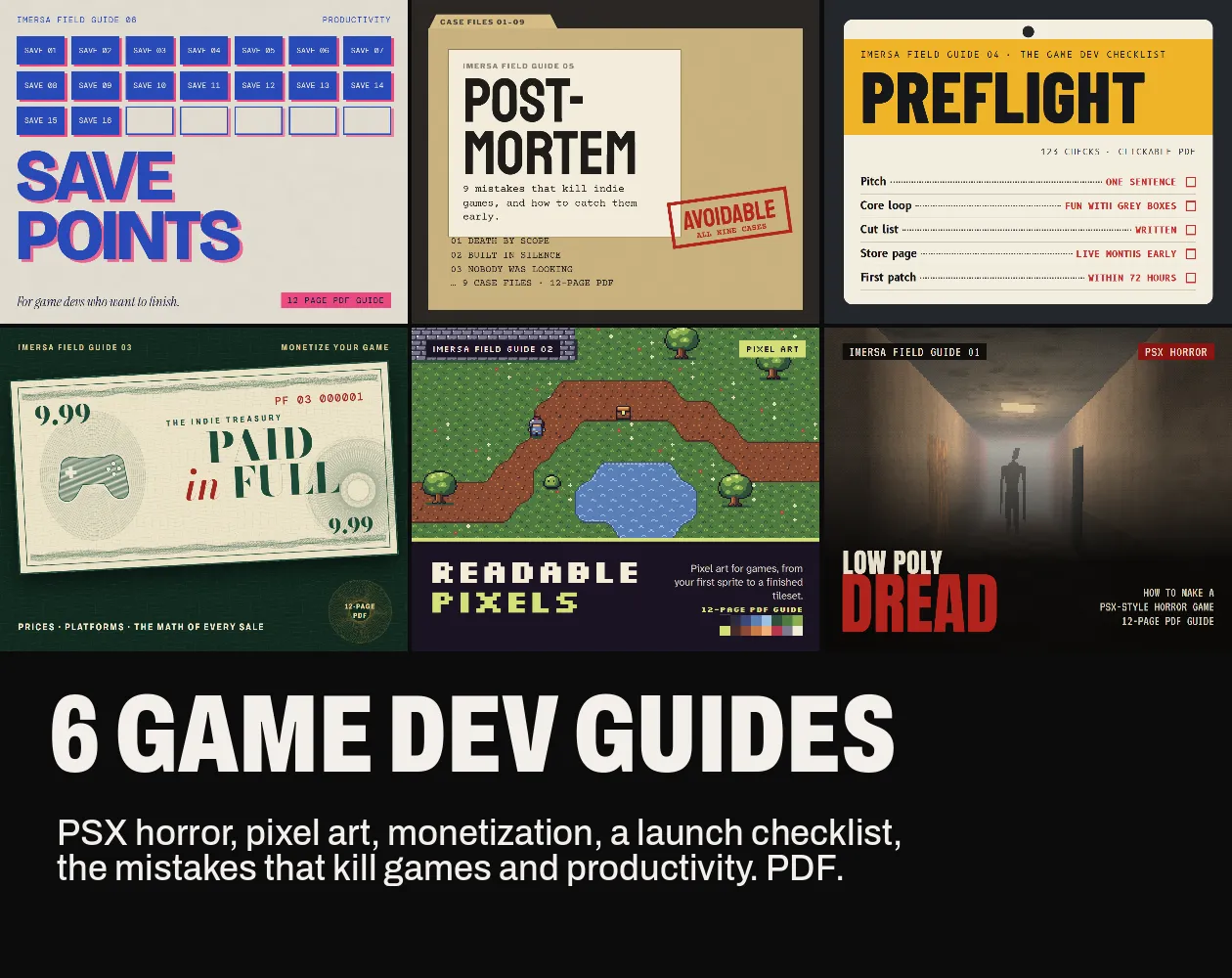
Many indie games fail from silence, not from bad quality. Post-Mortem covers nine causes, including building in silence and capsule art that does not say what the game is. Use the launch checklist to plan the last weeks.
Questions
As soon as you have something to show, ideally months before launch.
Publish the store page early, share short clips with a wishlist link and join Steam festivals or demo events when you qualify.
It can be, if you follow each subreddit's rules, contribute to discussions and share work in the right threads.
No. Free tools and consistent posting go a long way, though paid ads can help later.
Who wrote this
Imersa Studios builds the Unity systems, low poly packs and field guides sold on itch.io. The code and techniques here come from shipping those products. More about the studio.