
1. It is many jobs at once
A game needs design, code, art, animation, sound, writing, testing, community and marketing. Solo developers do all of it. Fix: pick a style and scope that need less. Low poly and pixel art are popular for this reason.
2. Scope grows silently
Every idea feels small, and together they are huge. Fix: a ranked cut list, as in how to scope your first indie game.
3. Fun is hard to predict
You cannot know a mechanic is fun until you play it. Fix: prototype with boxes in days, not months.
4. The last 10% takes half the time
Menus, settings, saving, bugs, platform rules and store pages are invisible until the end. Fix: plan for them from the start and use finished systems where you can.
5. Motivation fades
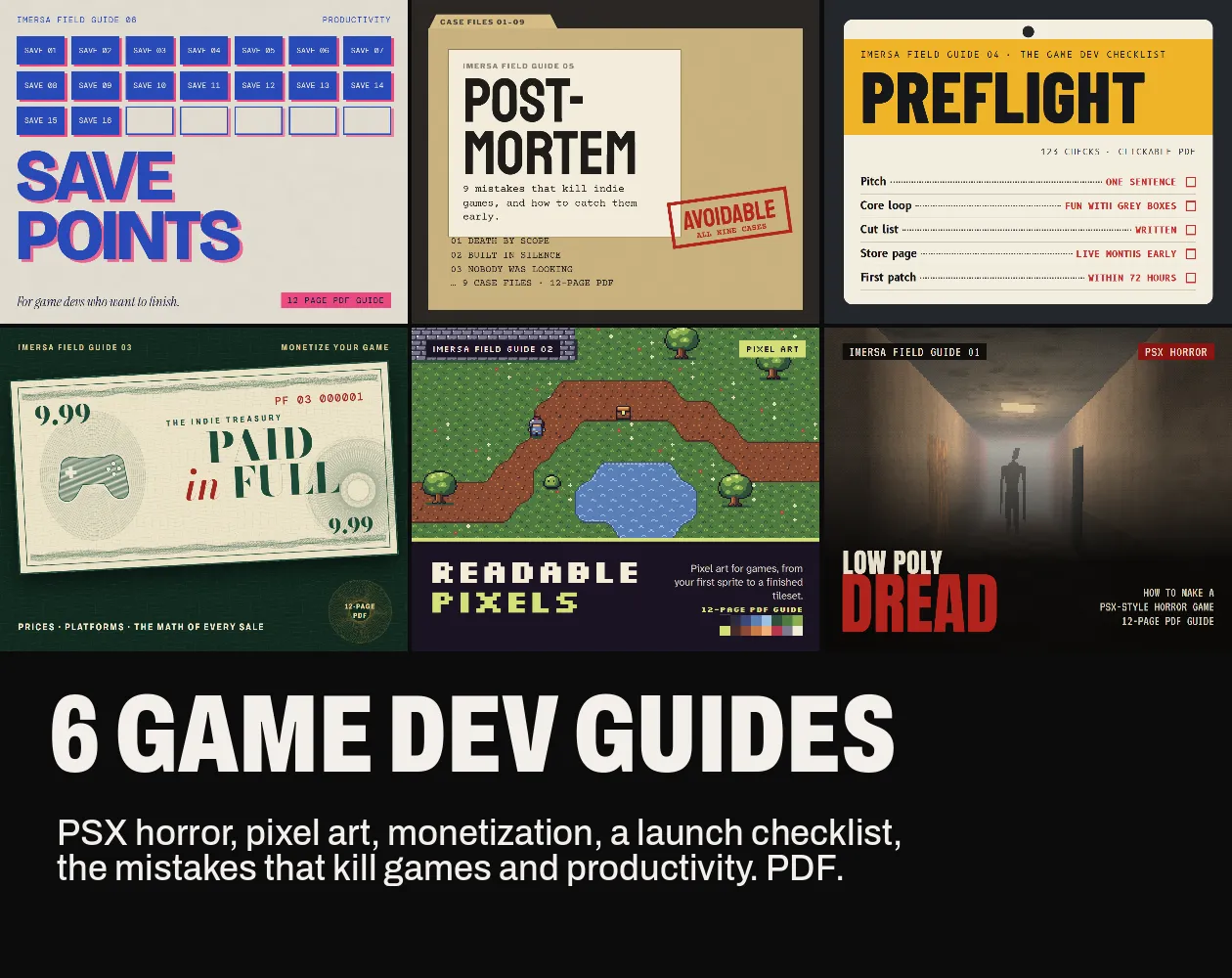
The first week is exciting and the fourth month is not. Fix: short milestones, visible progress and a release date. Save Points is built around this.
6. Tools and engines are complex
Engines have hundreds of settings. Fix: follow one tutorial to the end, then build your own tiny project.
7. Nobody sees your game
Even a good game can disappear. Fix: start showing it early. How to market an indie game is a free plan.
8. Comparison is brutal
You compare your first game with studios of hundreds. Fix: compare with your last game only.
9. The business side is a surprise
Pricing, taxes, store cuts and wishlists are new to most developers. Fix: learn them before launch. The revenue calculator and Paid in Full help. Post-Mortem lists nine mistakes that sink games quietly.
Questions
It combines many disciplines, and scope tends to grow. Most problems come from trying to build too much.
Yes. Break the project into weekly milestones and finish the smallest playable version first.
Common causes are scope that is too large, no audience before launch and a weak store page. Quality alone is not enough.
Yes. Each finished project teaches you scoping, tools and shipping, and the next one goes faster.
Who wrote this
Imersa Studios builds the Unity systems, low poly packs and field guides sold on itch.io. The code and techniques here come from shipping those products. More about the studio.