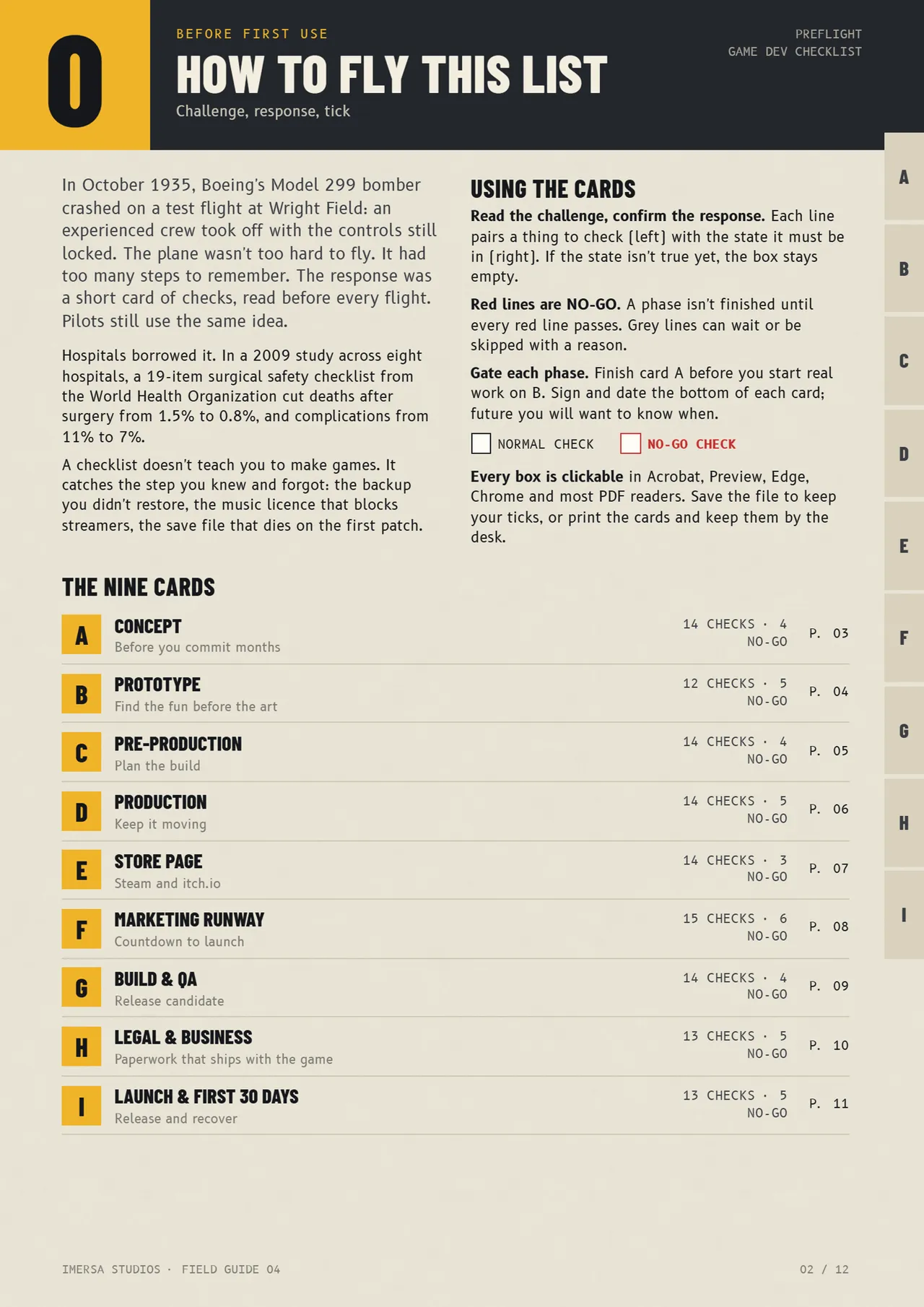
1. A hook in one sentence
Players decide in seconds. If you cannot explain your game in a sentence, a thumbnail cannot either. Name the genre, the twist and the feeling.
2. Scope you can finish well
Clair Obscur: Expedition 33, which took Game of the Year at The Game Awards 2025, was reported to have a core team of about 30 people and a budget under 10 million dollars, with a design that avoided a true open world to control cost. See the report. The lesson is not the budget but the scoping: they chose what to do very well and what to skip.
Our scoping guide shows the method for a solo developer.
3. Build an audience before launch
Hollow Knight: Silksong was reported by Team Cherry to have sold seven million copies in its first three months, but it came with years of an audience from the first game. Most indies do not have that, so they must build one: devlogs, short clips and wishlists. See how to market an indie game.
4. A store page that sells
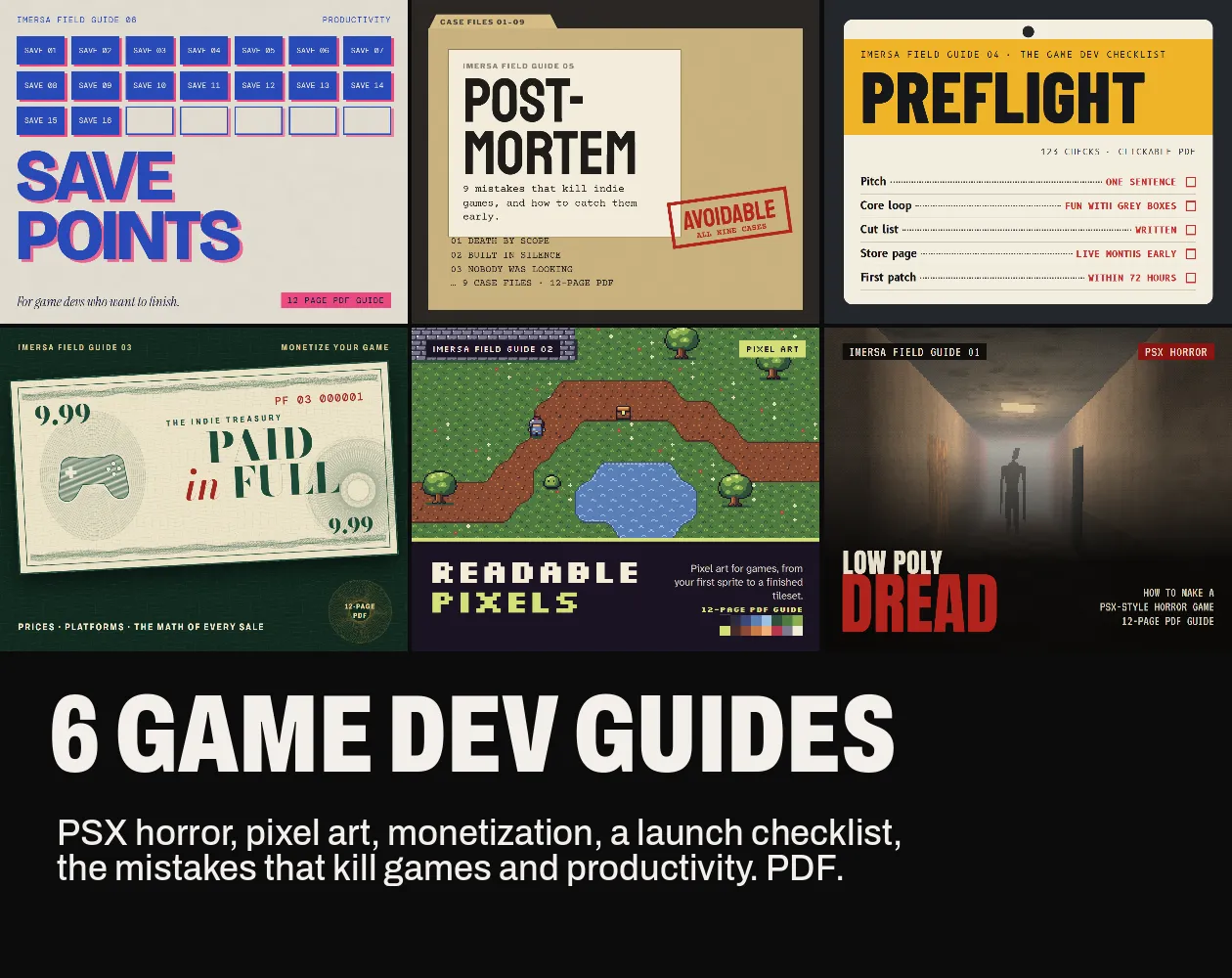
Capsule art, the first trailer seconds and tags decide clicks. The store image sizes guide lists the exact sizes, and the launch checklist covers the page.
5. Polish where players spend time
Menus, the first five minutes and the core loop deserve the most care. Cheap polish includes sound, screen shake, particles and good easing.
6. Patience and iteration
Many indie successes come from several small games and one that hit. Ship often, learn from each and keep a record. Post-Mortem lists mistakes to avoid, and the awards winners guide is a good list of games to study.
Questions
A clear hook, achievable scope, an audience built before launch, a strong store page and polish where players spend time.
Most do not earn much, and outcomes are very uneven. Build for learning first and plan for the long term.
No. Discovery matters as much, which is why marketing starts early.
A niche with passionate players is easier to reach than a crowded genre. Many small teams do well this way.
Who wrote this
Imersa Studios builds the Unity systems, low poly packs and field guides sold on itch.io. The code and techniques here come from shipping those products. More about the studio.