1. The eight paths
| Path | How you earn | Speed to first income | Risk |
|---|---|---|---|
| Sell your game | Steam, itch.io, consoles, mobile | Slow | High |
| Sell assets and tools | itch.io, asset stores | Fast | Low to medium |
| Game industry job | Salary at a studio | Fast | Low |
| Freelance | Contract game dev or art | Medium | |
| Teach | Tutorials, courses, videos | Slow | Medium |
| Ads or in-app purchases | Mobile and web games | Medium | High |
| Merch and soundtracks | Extras for fans | Slow | Low |
| Bundles and sales | Discounted bundles and seasonal events | Medium | Low |
2. Selling games
Revenue depends on price, store cut, refunds and tax. Use the revenue calculator to see what you actually take home, and the wishlist estimator to plan a first week. How to price your indie game and Paid in Full cover price strategy.
3. Selling assets and tools
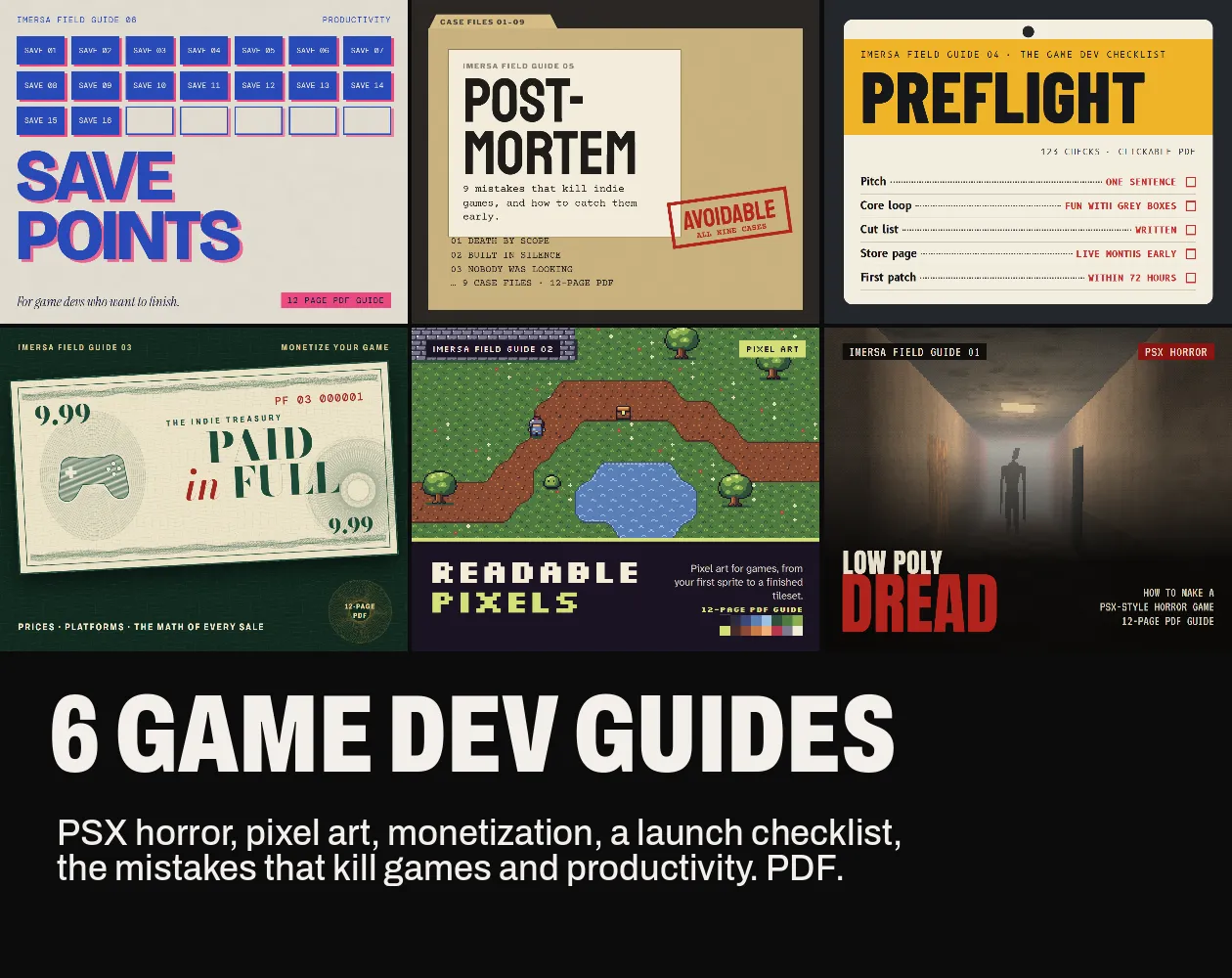
Other developers pay to save time. Systems, 3D models and guides sell steadily on itch.io, and every one is a small product you can finish in weeks. This is the model of the catalogue on this site: a mix of Unity systems, low poly packs and guides. Pick a niche, build to a high standard and show it in action.
4. Jobs and freelancing
Finished projects are a portfolio. A shipped game or a set of published assets proves you can finish, which employers and clients value. Freelance work can fund your own games.
5. Teaching
Tutorials, devlogs and courses turn what you learn into income and an audience. Every guide on this site is an example of a tutorial that leads to a product.
6. A simple plan
- Release a small game or asset pack within three months.
- Learn from the numbers: views, conversion and refunds.
- Build one thing that sells steadily, then expand.
- Keep a day job or contracts until income is steady.
Be realistic: many games earn little. Treat the first releases as training, and see why is making a game so hard for common traps.
Questions
Yes, but outcomes are uneven. Selling assets, freelancing and jobs are steadier than a single game launch.
It varies widely, from nothing to life-changing. Do not plan on a hit; plan on a sequence of small releases.
Selling assets, tools or templates, or freelancing, because the work is smaller and the buyers already exist.
Both. itch.io is quick and flexible, and Steam has more reach but more competition. Many developers use both.
Who wrote this
Imersa Studios builds the Unity systems, low poly packs and field guides sold on itch.io. The code and techniques here come from shipping those products. More about the studio.