1. Why a board beats a to-do list
A list hides how much is half-finished. A board shows work moving from left to right, so you can see where it piles up. Solo developers stall because ten things are started and none are done, and a board makes that visible.
2. The four columns that work
| Column | What goes in it | Rule |
|---|---|---|
| Backlog | Every idea and task, in rough order | Nothing leaves without a decision |
| Doing | What you are working on now | At most three cards |
| Testing | Built, but not checked in the game | Play it before you move it |
| Done | Finished and verified | Celebrate it |
Tag cards by type (design, code, art, audio, bug, store page) so you can filter and see whether you are neglecting a whole area.
3. Write cards you can finish
- Start with a verb: build, fix, draw, write.
- Aim for a few hours. If it takes days, split it.
- Add the finish line: it is done when the door opens and saves its state.
- Link a bug to how to reproduce it.
4. A weekly review
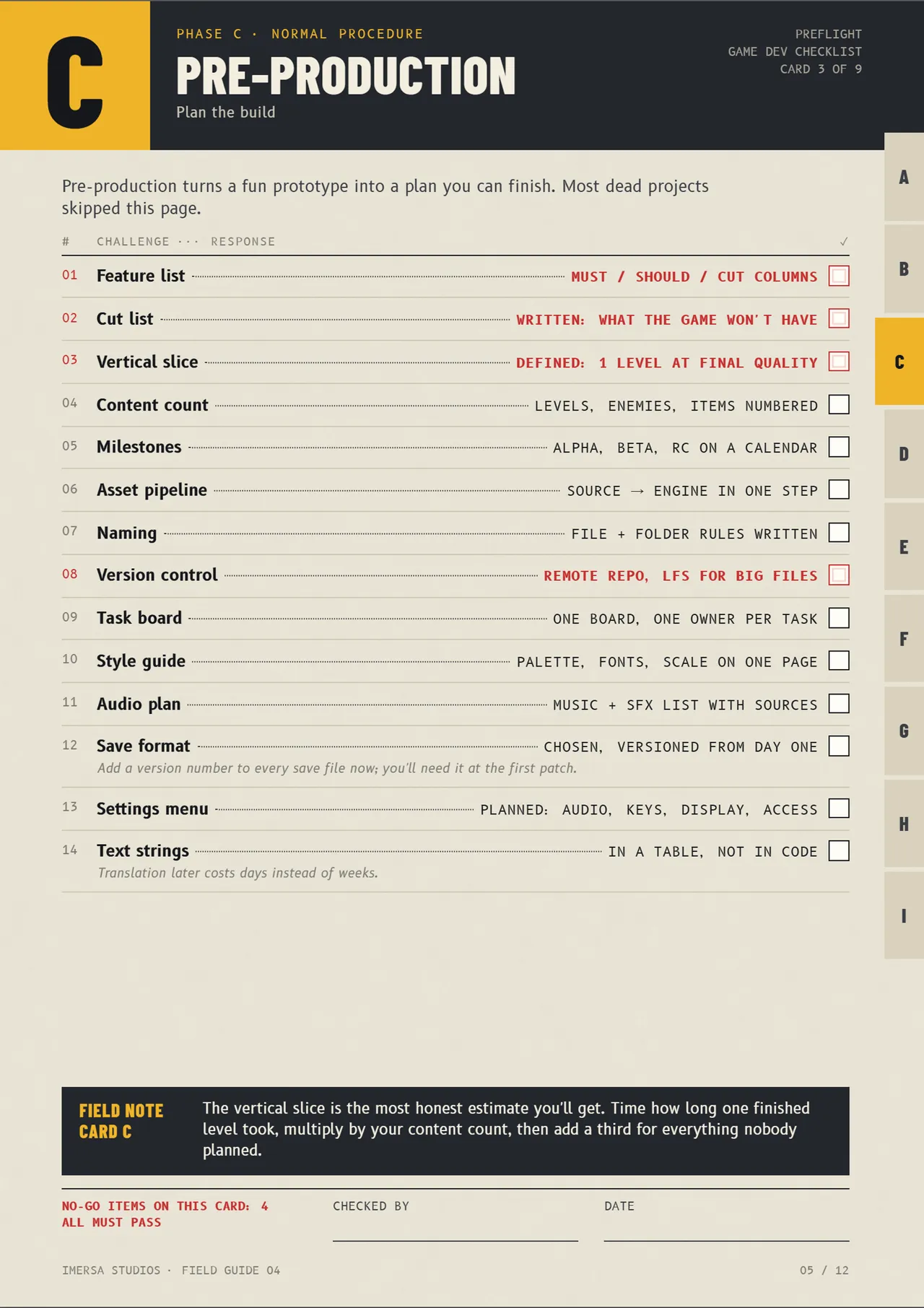
Once a week, spend fifteen minutes on the board: move what is done, delete what is stale, and choose next week's three cards. Compare this with your time estimate and cut scope if you are behind. The launch checklist gives you the cards for the last weeks before release.
5. Try the free board
Our game dev kanban board runs in your browser and saves in localStorage, with tags, filters, drag and drop and JSON export. It needs no account and sends nothing anywhere.
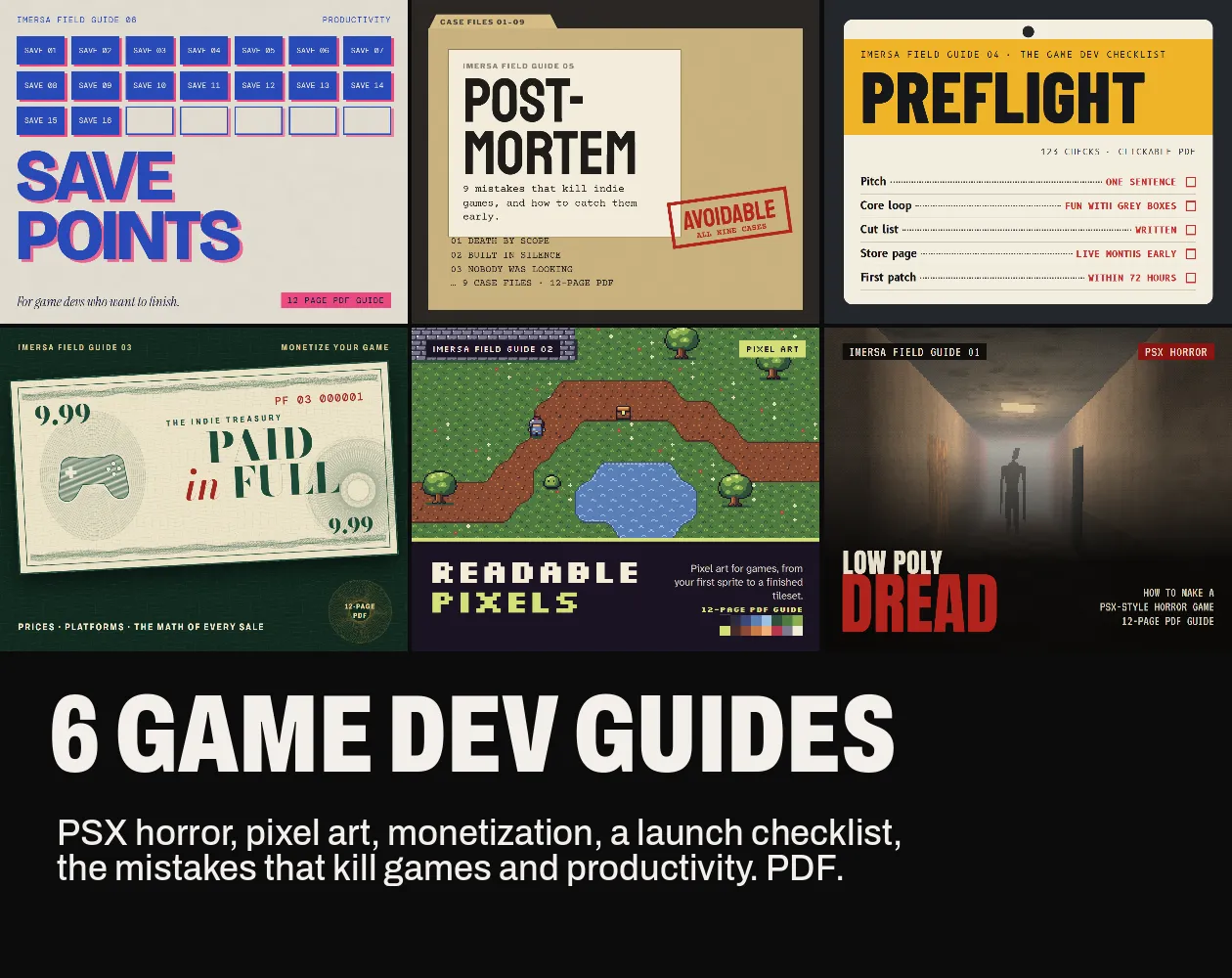
If you want the full system behind it, Save Points is our ebook on staying productive on a game project: weekly planning, energy, and how to keep shipping.
Questions
A board of columns, such as To do, Doing and Done, where cards move as work progresses.
Too many open tasks means nothing finishes. A limit of two or three keeps you focused.
Yes. It is stored only in your browser's localStorage on this device.
Yes. The method matters more than the tool. Our board is useful because it is instant and free.
Who wrote this
Imersa Studios builds the Unity systems, low poly packs and field guides sold on itch.io. The code and techniques here come from shipping those products. More about the studio.